RMAK Blog
Exterior Waterproofing: Why the Excavation Matters as Much as the Membrane
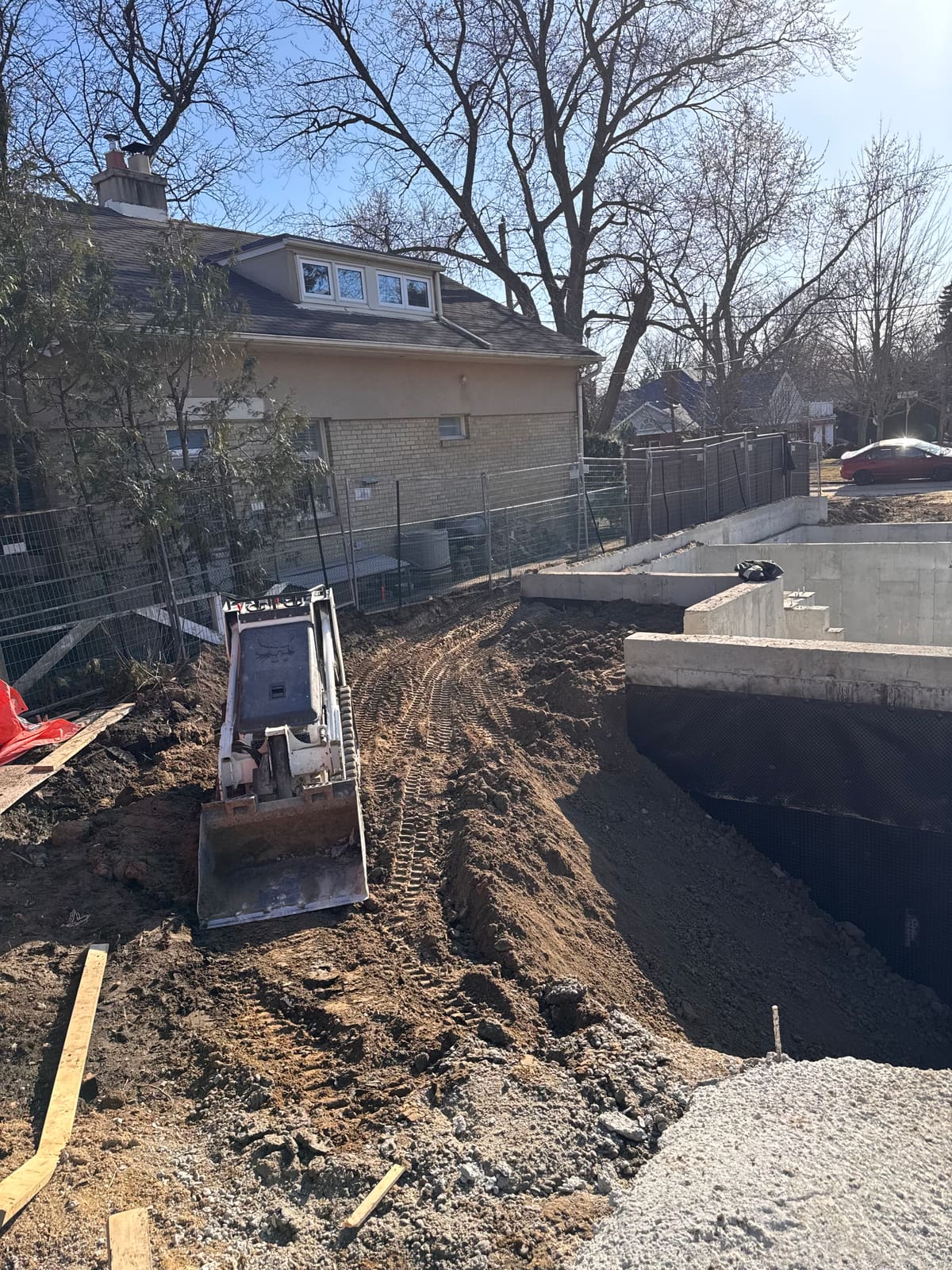
When people price exterior waterproofing, they compare membranes. This brand of rubberized coating, that brand of dimpled drainage board. Fair enough, the membrane matters. But here is what two decades around foundations teaches you: most waterproofing jobs succeed or fail on the excavation and the backfill, not the product on the wall. The membrane gets the marketing. The dig does the work.
What actually happens during exterior waterproofing?
Exterior waterproofing means digging down to the bottom of your foundation, right to the footing, and treating the wall from the outside. In most GTA homes that is a trench about 2 to 2.5 metres deep along the affected wall. The wall gets cleaned and repaired, cracks are patched, then the waterproof coating goes on, then a dimpled drainage membrane over that. At the bottom, the weeping tile, the perforated pipe that collects water at the footing, gets replaced or cleared. Then the trench is backfilled and the grade is restored.
Read that list again and notice something. One step is the membrane. Every other step is excavation, drainage, and backfill. That is where the quotes differ, and where the corners get cut.
Why is the digging the hard part?
Because it happens beside the thing holding your house up, in a space that is usually tight. The trench runs within arm’s reach of the foundation, so the machine work has to be careful and the last bit near the wall is often dug by hand. Utility locates come first, since gas and hydro services usually enter the house through the very walls being dug.
Depth brings safety rules. A trench over 1.2 metres deep that workers enter must have sloped or supported walls under Ontario’s construction regulations. Sloping the trench takes more room and moves more soil, which is part of why a proper exterior job costs what it does. A crew offering a bargain price on a full depth dig is saving money somewhere, and it is usually in the part you cannot see from the kitchen window.
Access decides the rest. A detached home with a wide side yard is straightforward. A semi in an older part of Mississauga or Toronto, with a metre between houses and a gas meter in the way, is careful, slow work. Decks, air conditioners, and mature trees all change the plan. This is why real quotes happen after a site visit.
What is weeping tile and why does it matter so much?
Weeping tile is the perforated pipe that sits beside your footing and collects the water that reaches the bottom of the wall. It drains to a sump pump or, in older homes, to the storm sewer. The membrane sheds water down the wall. The weeping tile carries it away. Without a working pipe at the bottom, water simply pools at the footing until it finds a way in, and the best membrane on the market cannot help you.
In homes from the 1950s through the 1970s, the original weeping tile was often actual clay tile in short sections. After sixty years it is usually crushed, shifted, or packed solid with silt. If your waterproofing quote does not mention replacing or verifying the weeping tile, ask why. The trench is open. The pipe is right there. Doing the wall and skipping the pipe is like reshingling a roof and leaving the rotten plywood.
Does the backfill really make a difference?
Yes, and it is the most invisible part of the job. The trench gets filled back in, and what goes in matters. Clear gravel against the drainage membrane gives water a fast path down to the weeping tile instead of sitting against the wall. Backfill placed in lifts and compacted properly will not slump into a trench along your wall two winters later. And the final grade on top has to slope away from the house, because otherwise the surface is funnelling water right back into the zone you just fixed.
Settled backfill is the classic callback. The yard develops a dip along the foundation, water collects in it, and the homeowner wonders why the expensive waterproofing job did not take. The membrane is fine. The dirt work failed.
How do I compare waterproofing quotes?
Ask each contractor four things. How deep are you digging, and are you going to the footing? What happens to the weeping tile? What are you backfilling with, and how? And what will the grading look like when you leave? The answers tell you more than any brochure about membranes. Waterproofing is an excavation job with a coating step in the middle, and it should be priced and judged that way.
RMAK Disposal and Excavation Services is family owned, serving Mississauga and the GTA since 2015. We handle waterproofing excavation, weeping tile, backfill, and grading, including tight access homes. Call or text Antoni at 647-675-6895 for a free quote.