RMAK Blog
Gravel Driveway and Parking Lot Maintenance Guide
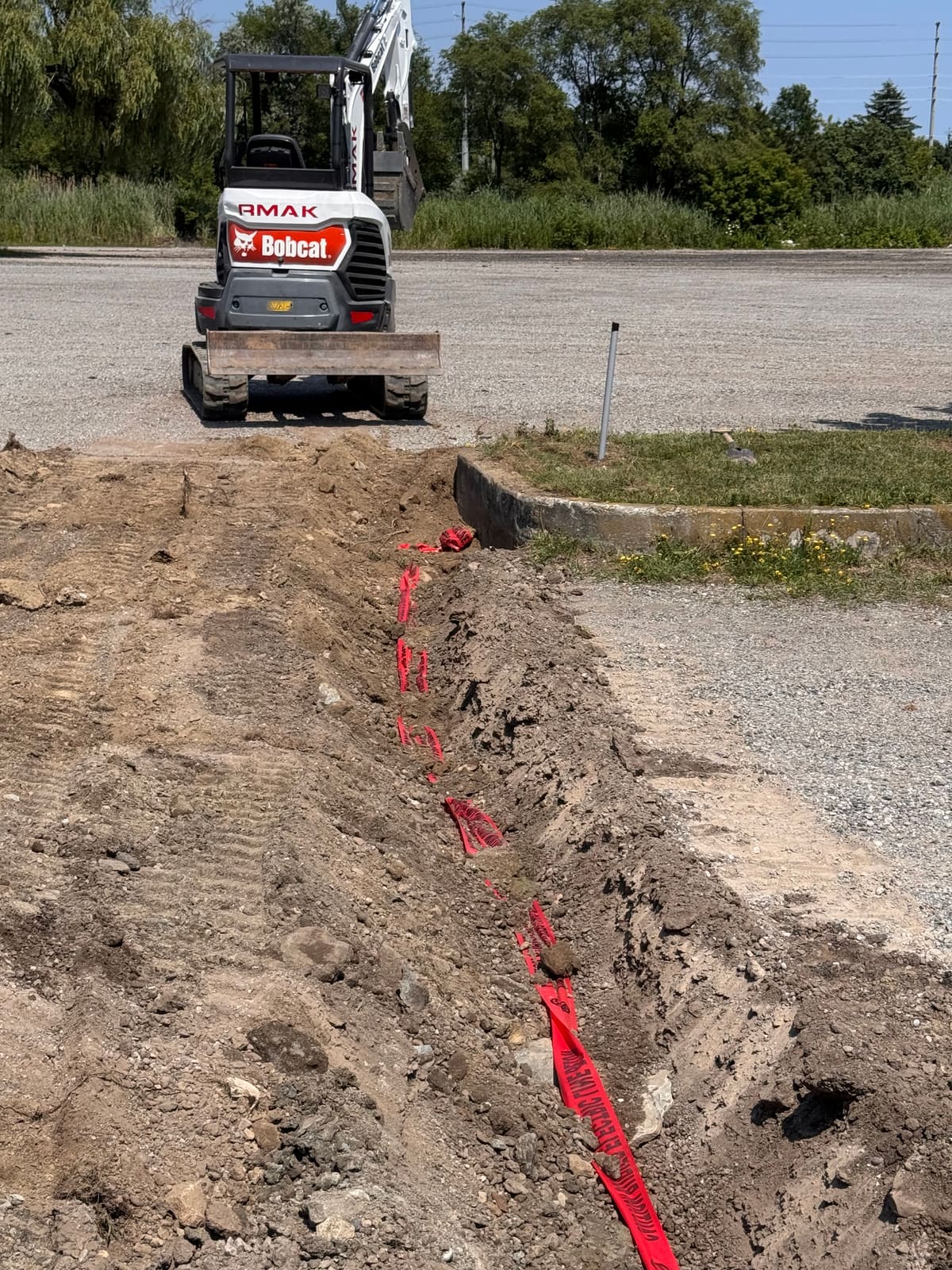
A gravel driveway is the cheapest surface you can put down and one of the most forgiving, but it is not maintenance free. Left alone for a few years, gravel develops potholes, washboard ripples, and soft spots, and the stone slowly disappears into the ground. The good news is that the maintenance is simple and cheap compared to asphalt or concrete repairs. Here is how to keep gravel solid through Ontario’s seasons.
What kind of gravel should a driveway be made of?
In Ontario the answer is usually Granular A, sometimes called crusher run or three quarter crush. It is crushed stone up to about 19 millimetres mixed with smaller stone and fine particles all the way down to dust. That mix is the whole point. The fines lock the larger stones together when compacted, so the surface binds into something close to a solid crust instead of rolling around underfoot.
This is why round river stone and clear gravel make poor driveways. With no fines, the stones never lock. They rut, they spread, and your car pushes them around forever. If your driveway feels like driving on marbles, it was topped with the wrong material. The fix is a lift of Granular A compacted over top.
A proper driveway is built in layers: a base of larger stone, called Granular B, on tough or wet ground, then 100 to 150 millimetres of Granular A on top, compacted. On decent existing ground, a Granular A surface alone often does fine.
Why do potholes keep coming back?
Because most people fix the symptom. The usual repair is kicking loose gravel into the hole, and the first rain undoes it. A pothole is a drainage problem wearing a disguise. Water sits in a low spot, softens the base, traffic pumps the soft spot into a hole, the hole collects more water, and around it goes.
A repair that lasts goes like this. Dig the pothole out down to firm material, past the soft muck at the bottom. Fill it with Granular A in layers, compacting each one, and finish slightly proud of the surface so traffic packs it flush. Do it on a dry day. Then look at why water was sitting there in the first place, because that is the real fix.
How often does a gravel driveway need grading?
For a home driveway, a proper regrade about once a year keeps things right, and spring is the natural time, after the frost is out and the surface has dried. A busy gravel parking lot, like a yard at a shop or a farm operation, needs it more often, sometimes a few times a season depending on traffic.
Grading is not just smoothing. The machine cuts into the surface, pulls material back out of the edges and low spots, restores the shape, and the driveway gets recompacted. The shape you want is a crown, meaning the centre sits higher than the edges, with a slope of a few percent, so rain sheds off to the sides instead of running down the middle and carving channels. A flat gravel surface is a temporary gravel surface.
Washboard, those tight ripples that rattle your teeth, comes from traffic and shows up worst on hills and at stop points. Only cutting below the ripples and regrading removes it. Driving slower helps it come back slower.
How much gravel does a driveway lose?
Gravel migrates. It gets pushed into the ground below, carried off by tires and snow clearing, and washed to the edges. A driveway typically needs a fresh lift of Granular A every few years, more often on soft ground or heavy use. If you are seeing the old surface or bare earth showing through, or mud pumping up between the stones in spring, you are overdue. Topping up sooner is cheaper than rebuilding later, because once the base goes soft you are paying for excavation, not just stone.
Spring thaw deserves its own mention. For a couple of weeks in March or April, the frost comes out of the ground and gravel surfaces go soft. Heavy trucks on a thawing driveway leave ruts that stay all year. If you can keep the heavy loads off for those weeks, do it. Ontario posts half load restrictions on rural roads each spring for exactly this reason.
Two last habits that pay off. Keep the ditches and culvert ends along your driveway clear, since a plugged culvert will wash out more gravel in one storm than a year of traffic. And in winter, have the plow operator carry the blade a touch high, because a blade dropped hard on gravel scrapes your stone into the snowbank, and you get to buy it again in June.
RMAK Disposal and Excavation Services is a family owned company serving Mississauga and the GTA since 2015, out to Hamilton, Barrie, Collingwood, and Owen Sound. We supply and spread Granular A, regrade driveways and lots, and rebuild the ones that have gone too far. Call or text Antoni at 647-675-6895 for a free quote.