RMAK Blog
What to Expect When Your Inground Pool Is Excavated
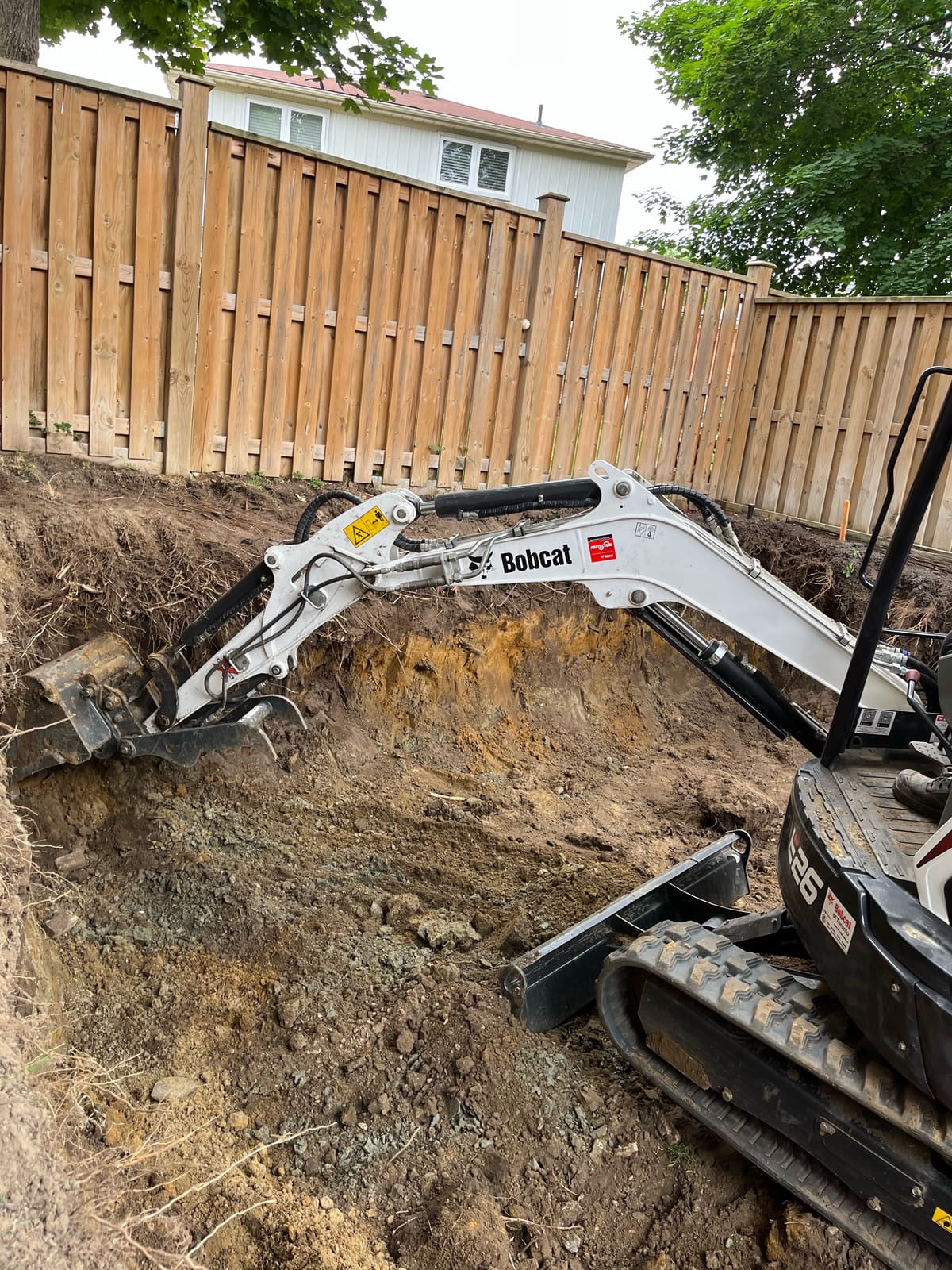
The excavation is the moment a pool project gets real. One day you have a lawn, the next day there is a hole the size of a school bus in your backyard. If you know what is coming, dig day is exciting. If you do not, it can be alarming. Here is what actually happens, from the homeowner’s side of the fence.
How does the excavator get into my backyard?
This is the first thing we check on any pool job, and it decides more about your project than most people expect. The machine needs a path from the street to the backyard. For a typical pool dig we want a gate opening or side yard clearance of roughly 2.5 metres or more for a midsize excavator. Fence panels come off, sometimes a gate post too, and that is normal. It all goes back after.
Tight access does not kill a project, it just changes the approach. A smaller machine can get through narrower gaps, but a smaller bucket means more days of digging. On truly locked in lots, some projects bring equipment over the house by crane. Your pool builder and excavator will have figured this out during the quote, but walk the route with them so nothing on it surprises anyone, air conditioners and gas meters especially.
Before any of this, utility locates. Ontario One Call marks the buried gas, hydro, and communication lines, and any private lines, like wiring to a shed, need a private locate. No marks, no digging.
How long does it take to dig a pool?
Usually one to two days for the digging itself, which surprises people who expect weeks. A typical residential pool in the GTA, say 16 by 32 feet, digs out in a day of steady work when access is good and the soil cooperates. Day two, if needed, is trimming the shape to the pool builder’s specs, digging the deep end profile, and cleaning up.
Soil conditions set the pace. Most of the GTA sits on clay, which digs cleanly and holds a wall well. Sandy soil sloughs and needs more care. The wild cards are rock, old buried debris, and water. Hit groundwater and the dig needs pumping. Hit an old foundation or fill from decades ago and there is sorting to do. Good contractors talk about these possibilities up front instead of pretending they never happen.
Weather matters too. A dig scheduled after a week of rain may wait a day or two, because tracking a heavy machine across a soaked lawn destroys it, and wet clay makes for sloppy, slow work.
Where does all the dirt go?
A typical pool dig produces somewhere around 100 to 150 cubic yards of soil once it fluffs up out of the ground. That is roughly eight to twelve tandem dump truck loads. Almost all of it leaves your property, because there is nowhere in a suburban backyard to hide a pile that size.
The rhythm of dig day is the excavator loading trucks as they cycle. A truck backs down the street or driveway, takes its load, and heads to a fill site while the next one arrives. Expect truck traffic on your street for the day. It is worth giving your neighbours a heads up, and if street parking is tight, ask them to leave the stretch in front of your house clear that morning.
Some soil usually stays behind on purpose. The pool builder needs material for backfilling around the shell later, and clean subsoil can be used to adjust grading. Where the rest goes is covered by Ontario’s excess soil rules, and an established excavator will have a proper receiving site lined up, not a vacant lot somewhere.
What will my yard look like afterward?
Honest answer: rough. There will be track marks where the machine travelled, a dirt apron around the hole, and plywood or gravel on the path the trucks used. This is temporary and normal. The yard gets rebuilt at the end of the pool project, after the shell, plumbing, and decking are in, when the final grading and landscaping happen. Judge the yard at the end of the project, not the week of the dig.
The hole itself will be fenced or secured, because an open excavation with vertical clay walls is genuinely dangerous, for kids most of all. Keep everyone out of it, full stop. If your pool builder’s schedule leaves the hole open for a stretch, ask how it will be secured and how rain will be managed, since a dug pool basin is also a very effective pond.
One more practical tip: decide early where you want any kept soil placed, and mention anything buried in your yard that you know about, old sprinkler lines, a dog fence, a forgotten septic tank on older rural lots. Ten seconds of your memory can save a day of everyone’s time.
RMAK Disposal and Excavation Services is family owned and has been digging pools and hauling soil across Mississauga and the GTA since 2015, from Oakville to Pickering and up to Barrie and Collingwood. Call or text Antoni at 647-675-6895 for a free quote on your pool excavation.