RMAK Blog
How Deep Do Trenches Need to Be in Ontario?
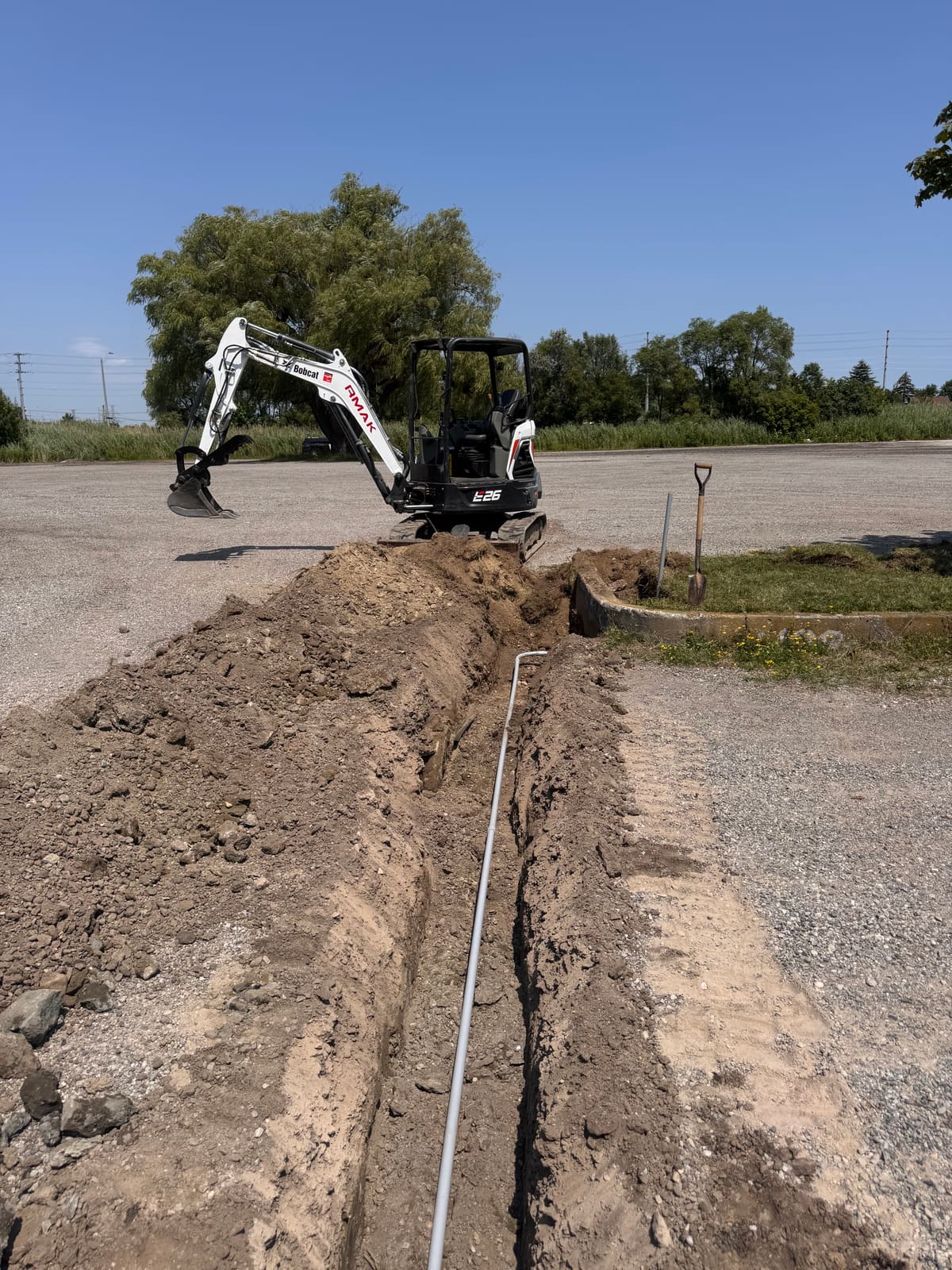
Every trenching job starts with the same question: how deep? The answer depends on what is going in the trench. Water lines have to beat the frost. Gas and electrical lines have their own code depths. And before any of it, the existing buried lines have to be located so you do not dig into them.
Here is a plain language rundown of typical trench depths in Ontario. One caution up front: these are general figures. Your municipality, your utility, and your site conditions set the final numbers, and gas and electrical work must be done by licensed trades.
How deep does the frost go in Ontario?
In southern Ontario, including the GTA, the ground typically freezes down to about 1.2 metres, or four feet, in a cold winter. Head north toward Barrie, Collingwood, and Owen Sound and design frost depths get deeper. Anything that can freeze, mainly water and sewer lines, has to sit below that line, because a frozen water line splits and a frozen sewer backs up into your house.
How deep are water lines buried in Ontario?
Deeper than the frost line, with a margin. Most GTA municipalities require water service lines to have about 1.7 to 1.8 metres of cover, roughly six feet. That margin exists because frost pushes deeper under cleared driveways and walkways, where there is no snow blanket insulating the ground.
This is why running a water line to a garage, a garden suite, or a barn is a real excavation job and not a weekend rental machine project. A trench that deep also brings safety rules with it. Under Ontario’s construction regulations, trenches deeper than 1.2 metres that a worker enters need sloped or supported walls. Trench collapses kill people every year, and the soil does not care whose yard it is.
How deep are gas lines buried?
Natural gas services to homes are shallower than water lines because gas does not freeze in the pipe. Residential gas services in Ontario are typically buried around 0.4 to 0.6 metres, roughly 15 to 24 inches, though depths vary with location and what is above the pipe. The utility or a licensed gas contractor installs and specifies these, not the homeowner.
The practical point for anyone digging is the opposite one: gas lines are shallow. A rototiller, a fence post auger, or a shovel can reach one. That is exactly why locates exist.
How deep do electrical lines need to be?
Buried electrical in Ontario follows the Ontario Electrical Safety Code, and the required depth depends on the wiring method and what is above it. As a rough guide, direct buried cable typically needs around 600 millimetres of cover, and cable in rigid conduit can be shallower, in the range of 450 millimetres, with different numbers under driveways. Anything under vehicle traffic generally has to be deeper.
Do not treat those numbers as a design. A licensed electrician determines the actual depth for your job and pulls the ESA permit. Our part is digging the trench to their spec, with sand bedding if the cable needs it and warning tape above.
What has to happen before any digging?
Locates. In Ontario, contacting Ontario One Call before you dig is required by law, whether you are a contractor or a homeowner planting a tree. It is free. You request it online or by phone, and the utilities mark their buried lines with paint and flags, usually within about five business days. The markings show where gas, hydro, water, and communication lines run so the trench can avoid them, or so we can hand dig carefully where we have to cross them.
Private lines are the catch. One Call covers the utilities’ lines up to your meter. Anything you or a previous owner added, like a line to a pool heater, a garage subpanel, or irrigation, is not in their records. If your property has any of that, tell your contractor. A private locate service can trace them if nobody remembers where they run.
What does trenching cost?
It depends on depth, length, soil, and access, so nobody honest quotes it blind. A shallow electrical trench across a soft lawn is quick. A 1.8 metre water line trench through clay, under a walkway, beside a mature tree, is a different job. When you call for a price, know roughly what is going in the trench, how far it runs, and what is in the way. That is enough for a contractor to give you a realistic range and then firm it up on site.
RMAK Disposal and Excavation Services is family owned, serving Mississauga and the GTA since 2015. We trench for water, hydro, gas contractors, and drainage across the region, from Hamilton and St. Catharines up to Barrie. Call or text Antoni at 647-675-6895 for a free quote.