RMAK Blog
Where Does the Dirt Go? Clean Fill, Soil Hauling, and Disposal Explained
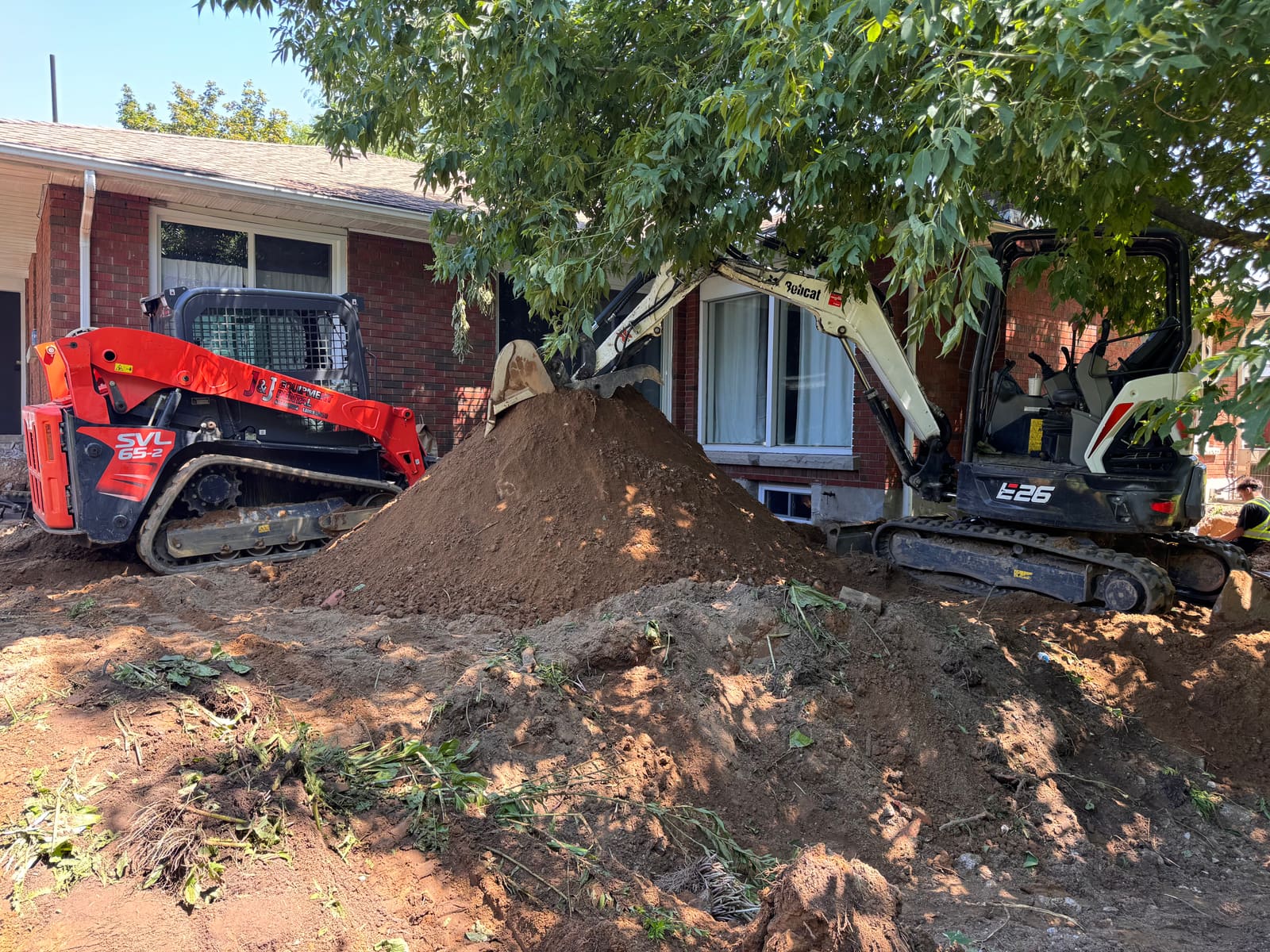
Dig a hole for a pool, a basement entrance, or a septic bed and you end up with a surprising amount of soil. A typical inground pool dig produces well over a hundred cubic yards. That soil has to go somewhere, and in Ontario, where it goes is now regulated. Here is how it actually works.
How much dirt comes out of an excavation?
More than the hole. Soil fluffs up when you dig it, so a hole of 100 cubic yards produces 120 to 130 cubic yards of loose material on the truck. A tandem dump truck carries roughly 14 to 16 cubic yards, so a pool dig can mean ten or more truckloads leaving your street. When you see an excavation quote, a big chunk of it is trucking, and this is why.
What counts as clean fill?
Clean fill means soil and inert material, like earth, clay, sand, and gravel, that is free of garbage, organics, and contamination. Clean fill is useful. Farms, grading projects, and construction sites take it to build up low areas. Because someone can reuse it, clean fill is the cheapest soil to get rid of.
The moment soil gets mixed with garbage, asphalt chunks, or debris, it stops being clean fill and the disposal cost jumps, because now it has to be screened or sent to a facility that charges by the tonne. This is why we keep excavated soil separate from demolition waste on every job. It is also why our 6 yard bins for soil should hold soil, not soil plus a broken patio set.
What is O. Reg. 406/19 and does it affect my project?
Ontario Regulation 406/19, called On-Site and Excess Soil Management, is the provincial rule that governs excess soil, meaning soil that leaves the site it was dug from. It came into force in stages starting in 2021. The idea behind it is simple: soil should be treated as a resource and reused where possible, and nobody should be quietly dumping contaminated soil on a farm field.
At a high level, the regulation does a few things. It makes the source site responsible for knowing what their soil is. It sets quality standards for where different grades of soil can be reused. And for larger or riskier projects, it requires planning, tracking, and registration on the provincial Excess Soil Registry.
For a typical homeowner project, the practical impact is lighter than it sounds. Small residential jobs with ordinary soil generally do not trigger the heavy requirements like registration. But the receiving sites care. A fill site accepting your soil wants to know where it came from and that it is what it claims to be. Sites that used to take anything with no questions asked are mostly gone, and that is a good thing.
Where it gets more involved is soil from potentially contaminated properties, think former gas stations, industrial land, or sites with old fuel tanks. That soil may need sampling and testing before any fill site will touch it, and it may have to go to a licensed facility at a much higher cost. If your property has that kind of history, tell your contractor up front. Finding out after the truck is loaded is expensive for everyone.
Where does the soil from my project actually end up?
A few places. Clean structural fill often goes to construction sites or grading projects that need material, sometimes the same week it was dug. Clean but lower grade soil, like topsoil mixed with clay, goes to fill sites that are building up land under an approval. Soil that does not meet reuse standards goes to a licensed landfill or processing facility, and that is the expensive lane.
Distance drives cost. A fill site twenty minutes away versus an hour away can change your trucking bill by thousands on a big dig. Part of what you pay an established excavation contractor for is their relationships with receiving sites around the GTA and knowing which ones are taking material that month.
Can I keep some of the soil?
Sometimes, and it can save money. If your yard has a low spot, spreading some excavated material on site means fewer trucks. The catch is that subsoil from deep in a hole is usually clay, and clay makes poor lawn. It works as base grading with topsoil over it, but do not expect grass to love it raw. Also mind your own grading. Piling soil against your foundation or changing how water flows toward a neighbour creates problems the regulation never will.
The short version: dirt is not free to move, where it goes is regulated, and honest contractors build that into the quote instead of surprising you.
RMAK Disposal and Excavation Services is family owned and has been hauling soil and running bins in Mississauga and across the GTA since 2015. We handle the digging, the trucking, and the disposal as one job. Call or text Antoni at 647-675-6895 for a free quote.